
Palermo is not a city you simply visit.
It's a city you experience.
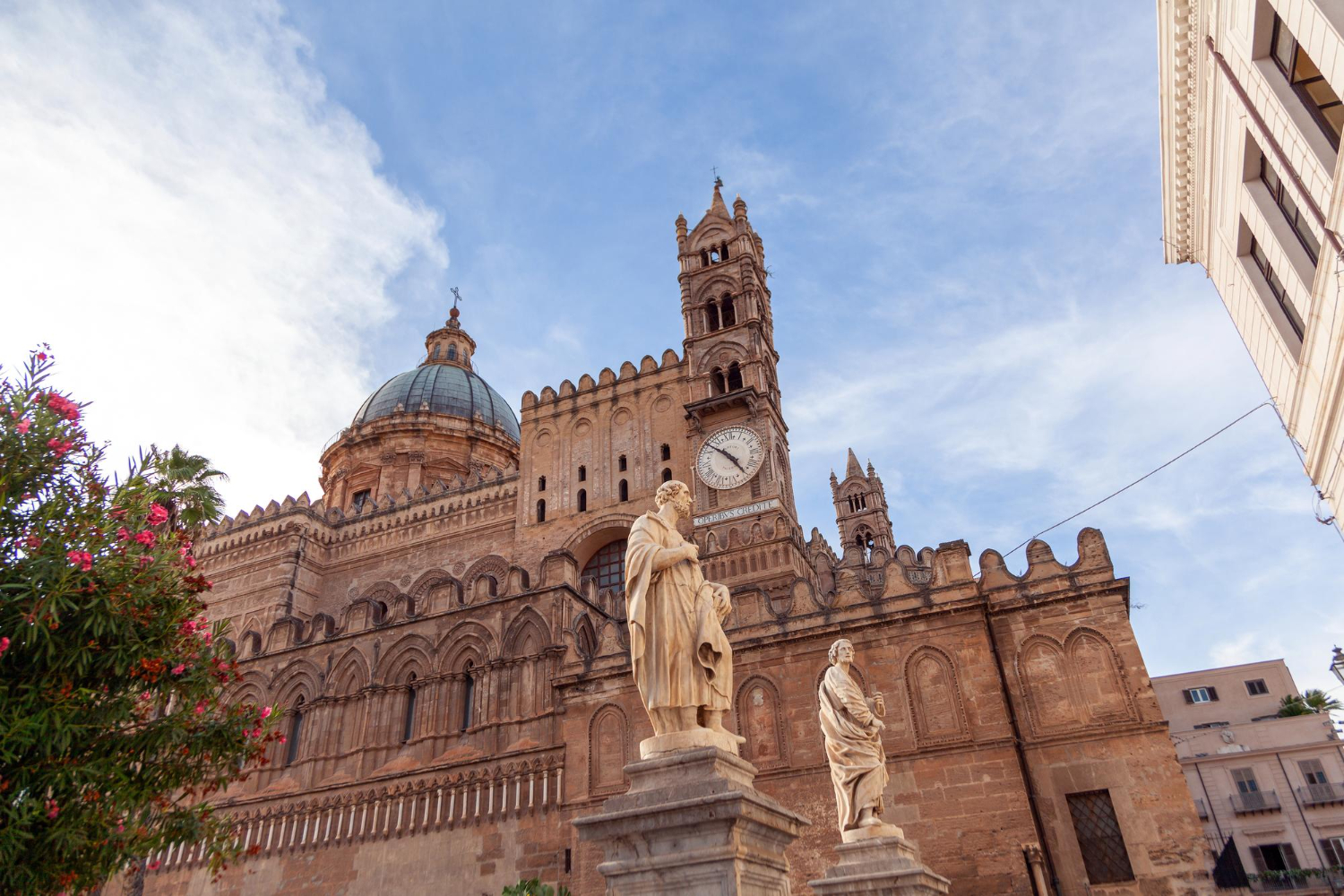
Sicily's capital city unites contrasts in a way that is unique in Europe. Here, Arab influences meet Norman architecture, baroque churches meet vibrant markets, and magnificent palaces meet simple everyday life. It is precisely these contrasts that make Palermo one of Italy's most fascinating travel destinations.
Walking through the streets of the old town is like walking through centuries of history. For a long time, the city was a crossroads in the Mediterranean – shaped by Phoenicians, Romans, Arabs, Normans, and Spaniards. Each of these cultures has left its mark, which is still visible today.
This diversity is particularly striking in the architecture. Buildings such as the Palazzo dei Normanni or the Cappella Palatina combine different styles into a harmonious whole. Golden mosaics meet Arabic ornamentation, clean lines meet decorative details.
But Palermo is not just history. The city is alive – loud, intense, and often contradictory. In markets like Ballarò or Capo, voices, scents, and colors blend into an experience that engages all the senses. Here, Palermo reveals its most authentic side.
For a long time, the city was primarily known for negative headlines. Issues like crime and the Mafia dominated its image. But Palermo has changed. Today, the city also stands for civic courage, commitment, and a new perspective on its own identity.
This very development makes Palermo particularly interesting. It is a city in transition, one that does not suppress its past but integrates it into its present.
For travelers, this means: Palermo cannot be grasped superficially. Those who take their time will discover a city with depth – full of stories, full of contrasts, and full of life.
Palermo is not a typical tourist destination.
It's an experience that will stay with you.